Mostrend: A Handwritten Font for Makers
The morning light was just hitting my workbench when I opened the design file for a new batch of soy candle labels. I had the scent names ready—Lavender Drift, Cedar & Sage, Vanilla Bean—but the typography felt stiff. The standard sans serifs looked too corporate, and the overly curly scripts were illegible at small sizes. I needed something that felt like it had been written by hand, with warmth and personality, but still maintained enough structure to be read clearly on a curved glass jar. That is when I discovered Mostrend.
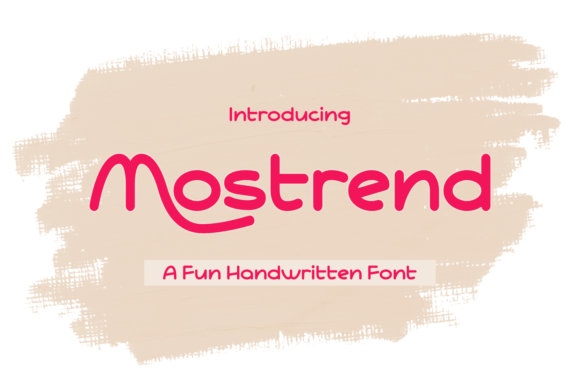
As a crafter and small shop owner, finding the right typeface is often the difference between a product that looks homemade and one that looks professionally handmade. Mostrend is a sweet and friendly handwritten font that bridges this gap perfectly. It is not just a collection of letters; it is a design asset that brings a natural, human touch to every project. Whether you are creating printable wall art, designing wedding invitations, or printing boutique tags, this script handwritten font offers a unique style that fits a large pool of designs. The only limit, as the description says, is your imagination, but having a reliable tool like Mostrend makes exploring those limits much more enjoyable.
Bringing Warmth to Product Labels and Packaging
One of the most common challenges for handmade sellers is packaging design. Your label is often the first point of contact a customer has with your brand identity. If you sell organic soaps, artisanal jams, or hand-poured candles, your packaging needs to communicate care and authenticity. Mostrend excels in this area because of its balanced stroke weight and natural flow. It does not look like a computer-generated imitation of handwriting; it looks like genuine penmanship.
I recently used Mostrend for a line of seasonal gift tags. The goal was to create a rustic yet elegant look for holiday packaging. By pairing Mostrend with a clean, simple sans serif font for the smaller details like ingredients or weight, the contrast created a modern typography feel that was both trendy and timeless. The handwritten nature of Mostrend added an emotional appeal, making each tag feel personal, as if I had written it myself for the recipient. This level of detail enhances perceived quality and helps build customer recognition. When a buyer sees that same friendly script on your thank-you cards, social media graphics, and product labels, it creates a cohesive brand identity that feels trustworthy and inviting.
Versatility in Stationery and Wedding Design
Beyond physical products, Mostrend is a powerhouse for stationery designers and invitation creators. Wedding stationery requires a delicate balance between formality and romance. While traditional calligraphy fonts can sometimes feel too rigid or difficult to read, Mostrend offers a relaxed elegance. It works beautifully for wedding welcome boards, save-the-date cards, and menu designs. The font’s friendly demeanor makes it suitable for both bohemian outdoor weddings and more structured indoor ceremonies.
For printable creators, this versatility is invaluable. You can use Mostrend for planner pages, adding a touch of whimsy to daily headers or motivational quotes. It is also an excellent choice for greeting cards. Whether it is a birthday message, a sympathy note, or a congratulations card, the tone of Mostrend is supportive and warm. When designing digital downloads, such as editable templates for Etsy, using a premium font like Mostrend can significantly increase the value of your product. Customers are looking for design assets that are easy to customize but still look professional. Mostrend’s legibility ensures that even when customers change the text, the final result remains polished and attractive.
Readability and Technical Considerations for Crafters
While the aesthetic appeal of a script font is crucial, practical usability is equally important, especially for those using cutting machines like Cricut or Silhouette. One concern with handwritten fonts is how well they cut at small sizes. Mostrend performs surprisingly well in this regard. Its strokes are distinct enough that they do not merge together when scaled down for small stickers or product labels. However, as with any display font, it is wise to test your cuts. I recommend doing a test run on vinyl or cardstock before committing to a large production batch.
For those creating SVG-style designs or working with web design elements, checking the included file formats is essential. Mostrend typically comes in standard formats like OTF and TTF, which are compatible with most design software, including Adobe Illustrator, Photoshop, Canva, and Procreate. Before selling physical products or digital downloads, always review the commercial font licensing terms. Understanding whether the license covers end-product sales, template creation, or merchandise like mugs and shirts is critical for running a compliant handmade business.
Another aspect to consider is font pairing. Mostrend shines when it is not used alone for long paragraphs. It is primarily a display font, best suited for short phrases, names, titles, and decorative wording. For body text, pair it with a neutral sans serif font or a simple serif font. This combination ensures that the eye is drawn to the beautiful handwritten headings while the informational text remains easy to read. This technique is particularly effective for editorial design layouts, such as lookbooks or catalogues, where you want to guide the viewer’s attention through hierarchy and contrast.
Elevating Brand Identity Through Consistent Typography
Consistency is key to building a recognizable brand. Using Mostrend across various touchpoints—from your logo design to your social media graphics—creates a unified visual language. Imagine a tote bag with a witty quote in Mostrend, paired with a matching sticker on the packaging and an Instagram post announcing the new drop. The recurring use of this creative font reinforces your brand’s personality. It tells your audience that you value creativity, warmth, and attention to detail.
Moreover, the natural style of Mostrend allows it to adapt to different seasons and trends without losing its core identity. In spring, it pairs well with pastel colors and floral illustrations for Easter tags. In winter, it complements deep greens and gold foils for Christmas ornaments. This adaptability means you do not need to constantly search for new fonts; instead, you can deepen your mastery of one versatile typeface. By exploring its alternates, ligatures, and swashes, you can create unique variations that keep your designs fresh while maintaining brand consistency.
Ultimately, choosing a font is a creative decision that impacts how your work is perceived. Mostrend is more than just a set of characters; it is a tool for storytelling. It invites the viewer to slow down and appreciate the handmade nature of your products. Whether you are a hobbyist making gifts for friends or a commercial craft seller scaling up your shop, incorporating a high-quality handwritten font like Mostrend can elevate your designs from ordinary to exceptional. It encourages you to experiment, to play with layout and spacing, and to infuse your unique voice into every piece you create. In a world of mass-produced goods, that human touch is your greatest asset.